
Powerful Chemical-Resistant Industrial Floors MN
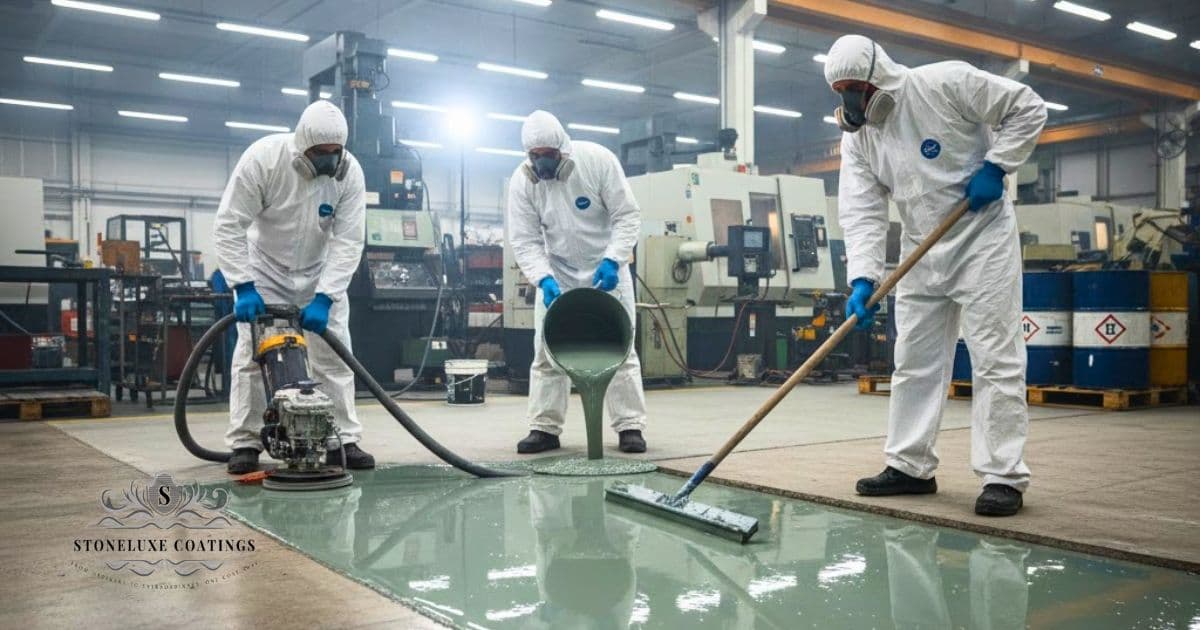
Manufacturing environments face constant chemical exposure, from acids and alkalis to solvents, oils, and corrosive byproducts. Without the right flooring system, these substances can erode concrete, compromise safety, and disrupt production. Chemical-resistant industrial floors provide long-lasting protection by forming a seamless barrier that blocks penetration and prevents surface breakdown.
Facilities in Minnesota deal with extreme temperatures and seasonal moisture, increasing the need for strong, stable flooring. StoneLuxe Coatings provides durable, high-performance systems designed to withstand aggressive chemical conditions and support manufacturing operations without interruptions.
Why Chemical Resistance Matters in Manufacturing
Chemical spills happen during mixing, transport, cleaning, and machining processes.
When a floor is not chemically protected, harmful substances seep into concrete, breaking down its structure and causing cracking, soft spots, and contamination.
Chemical-resistant flooring prevents damage by creating a sealed surface that repels corrosive liquids, protecting equipment and worker safety. Facilities that handle acids, caustic agents, solvents, and oils rely on high-quality flooring to stop erosion, reduce slip risks, and maintain clean, controlled environments.
Downtime is another major concern. Damaged floors interrupt production and require costly repair work. Seamless resin systems reduce this risk and help maintain consistent performance.
Manufacturing plants in Minnesota benefit from durable coatings that handle temperature swings, washdowns, and constant exposure to industrial materials. Chemical-resistant floors keep operations moving smoothly, limit maintenance needs, and extend the life of your facility.
What Chemical Exposure Does to Standard Floors
Surface Erosion From Acids and Alkalis
Concrete reacts aggressively with acids and alkalis, causing pitting and erosion. Once a surface becomes weakened, it deteriorates quickly, leading to unsafe work areas. Strong resin systems block this reaction, ensuring the concrete stays intact even under harsh conditions.
Solvent Penetration and Structural Weakening
Solvents penetrate porous concrete, breaking down binders and compromising stability. This leads to soft spots, contamination issues, and uneven surfaces. Chemical-resistant coatings eliminate porosity, preventing absorption and long-term damage.
Staining, Etching, and Loss of Traction
Harsh cleaners, oils, and dyes stain untreated concrete and create friction loss. Slippery floors reduce worker confidence and increase the risk of accidents. Protective coatings maintain traction and prevent discoloration for cleaner, safer work zones.
Types of Chemical-Resistant Industrial Floors
Epoxy Novolac Systems for Harsh Acids
Epoxy novolac coatings provide outstanding resistance to acids, aggressive chemicals, and high-temperature washdowns. These systems bond tightly to concrete and offer superior hardness, making them ideal for chemical processing, battery rooms, labs, and manufacturing lines.
Urethane Mortar for Heavy Impact and Chemicals
Urethane mortar systems combine strength, impact resistance, and chemical protection. Their dense composition withstands forklift traffic, dropped tools, and thermal shock. Manufacturing plants with heavy loads and constant moisture prefer urethane mortar for its longevity and durability.
Polyaspartic Coatings for Fast Turnaround
Polyaspartic coatings cure fast, allowing facilities to return to work quickly. They resist staining, chemicals, and abrasion while providing UV stability. These coatings are ideal for large manufacturing spaces needing quick installation with long-lasting performance.
Polyurethane Systems for Flexibility and Heat
Polyurethane coatings offer flexibility and heat resistance, making them suitable for areas exposed to high temperatures or vibration. Their elastic nature prevents cracking when concrete expands or contracts during Minnesota’s temperature changes.
Key Features of Chemical-Safe Flooring
Impermeability and Seamless Protection
Chemical-resistant floors must be fully seamless to eliminate cracks or joints where substances can collect. Resin-based coatings create a smooth, non-porous surface that prevents absorption and protects the concrete substrate from long-term exposure.
Thermal Shock Resistance
Manufacturing facilities often use steam cleaning, hot liquids, or high-temperature equipment. Thermal shock-resistant coatings prevent cracking or delamination when exposed to sudden temperature changes, keeping surfaces stable.
Slip Resistance for Spill-Prone Zones
Chemical areas require reliable traction even during spills. Slip-resistant textures ensure safer movement for workers and equipment. This enhances workplace safety and reduces accident risk in wet or contaminated areas.
Where Chemical-Resistant Floors Are Essential
Production Lines and Process Areas
Manufacturing lines encounter constant exposure to oils, coolants, and corrosive materials. Coating these areas prevents surface degradation and keeps workflows smooth and safe.
Chemical Storage and Mixing Rooms
Storage and mixing zones experience the highest risk of accidental spills. Chemical-resistant coatings protect the floor from corrosion and maintain a controlled environment.
Washdown, Sanitation, and Containment Areas
Frequent washdowns and sanitation cycles require floors that endure water, detergents, and high-pressure cleaning. Seamless resin systems prevent moisture absorption and contamination.
Surface Preparation for Chemical-Safe Floors
Profiling, Crack Repair, and Moisture Control
Proper surface preparation ensures a strong bond between concrete and coating. Profiling removes weak layers, while repairing cracks prevents chemical intrusion. Moisture testing ensures the substrate is stable enough for installation.
Joint Treatment for Long-Term Protection
Industrial environments require reinforced joints that resist chemical attack and heavy wear. Filling and sealing joints prevents breakdown and keeps the floor smooth and durable.
Ensuring Resin Bond Strength
Old or damaged concrete must be restored before coating. Strong mechanical preparation ensures resin penetration and long-term adhesion, preventing peeling or coating failure.
How to Maintain Chemical-Resistant Floors
Regular cleaning helps maintain performance and safety.
Using approved detergents prevents chemical reactions with the coating. Routine inspections catch early signs of wear, ensuring prompt repairs before problems spread. Keeping the floor free of standing liquids and contaminants extends its lifespan and ensures consistent protection. Proper maintenance routines help preserve traction, clarity, and durability in every part of the manufacturing facility.
How StoneLuxe Coatings Supports MN Facilities
StoneLuxe Coatings provides chemical-resistant industrial flooring systems tailored to Minnesota’s manufacturing environments. Their epoxy novolac, urethane mortar, polyaspartic, and polyurethane solutions provide powerful protection against corrosive substances and heavy operational demands.
Each installation includes expert assessment of chemical exposure, temperature conditions, moisture levels, and traffic patterns to create a long-lasting system. Manufacturing plants trust StoneLuxe Coatings for durable floors that support daily operations and withstand harsh industrial conditions.
Their seamless installations, strong adhesion, and advanced resin technologies ensure your facility remains safe, efficient, and compliant throughout every season.
Conclusion
Chemical-resistant industrial flooring is essential for protecting manufacturing facilities from corrosion, contamination, and structural damage. With the right resin system and professional installation, your floors stay strong, stable, and safe under the toughest chemical conditions.
StoneLuxe Coatings delivers durable solutions that help Minnesota manufacturing plants maintain performance, reduce downtime, and protect their concrete for years to come.